
Introduction:
Many organizations have valuable information spread across network drives, legacy document management systems, shared folders, departmental databases, FTP locations, and older enterprise content management platforms. Staff may know that a document exists, but not where the current version lives or whether it is complete, approved, or still valid.
Content consolidation solves this problem by bringing documents, metadata, and records into a centralized, governed information environment. For organizations with compliance obligations, high-volume operations, or mission-critical programs, consolidation is not just a storage project. It is a foundation for better decisions, faster service, and stronger accountability.
What Is Content Consolidation?
Content consolidation is the process of gathering enterprise content from fragmented sources and placing it into a secure, organized, and governed repository. This may include documents from network file shares, legacy ECM platforms, case systems, document management systems, FTP servers, and other disconnected environments.
The objective is to create a reliable single source of truth. Staff should be able to find the right information quickly, understand its context, and trust that it is current, complete, and managed according to policy.
Why Information Silos Are Expensive
Information silos create hidden costs. Staff spend time searching for documents, recreating files, asking other departments for records, and verifying whether information is accurate. Duplicate repositories can lead to inconsistent decisions because different teams may rely on different versions of the same record.

Silos also create compliance risk. Without centralized governance, organizations may struggle to enforce role-based access, retention schedules, legal holds, audit response, and defensible disposition. Over-retention can increase legal exposure, while premature deletion can create audit and records management issues.
The IIG Approach to Content Consolidation
IIG centralizes enterprise content into a secure, governed repository while preserving the business context needed to make that content useful. Consolidation is not limited to moving files. It also involves organizing documents, preserving metadata, applying access controls, and enabling staff to search and retrieve information efficiently.
A centralized content repository can support different enterprise storage strategies, including platforms such as Box, AWS, Azure, or other approved repositories. The key is that content becomes governed, accessible, and connected to the operational processes that depend on it.
Information Governance Built Into the Repository
Effective consolidation requires governance from the beginning. IIG supports role-based access, policy enforcement, retention management, legal holds, and defensible disposition. These controls help organizations manage sensitive, regulated, and mission-critical information in a consistent way.
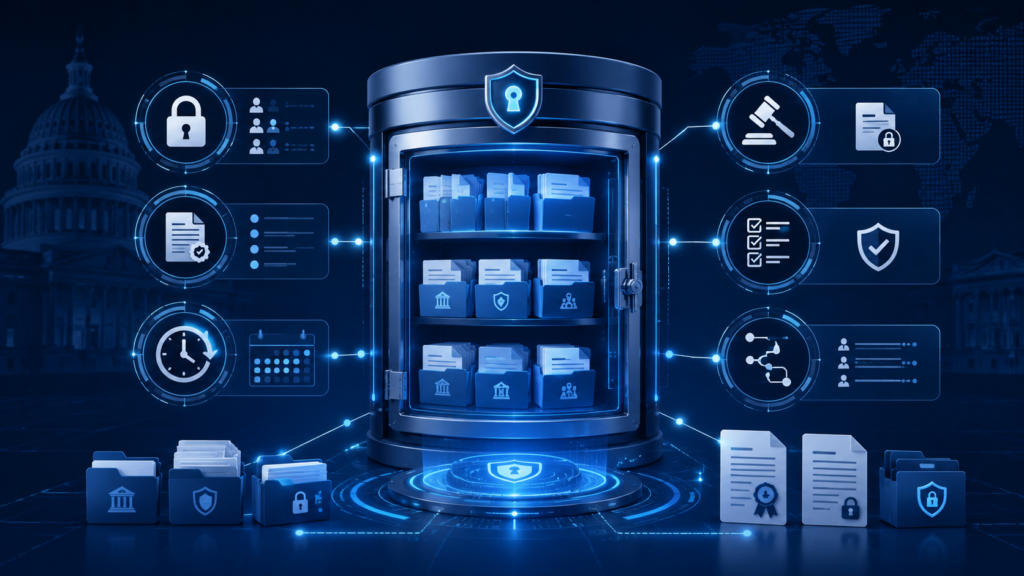
When governance is embedded into the content environment, compliance becomes part of daily operations. Staff can work with the documents they need, while the organization maintains control over who can access information, how long it is retained, and when it can be disposed of according to policy.
Operational Benefits of a Single Source of Truth
Centralized content improves productivity because staff no longer need to search across multiple systems to reconstruct a complete file. Faster access to accurate information supports faster decisions, more consistent outcomes, and fewer manual handoffs.
Leadership also benefits from better visibility. When content, metadata, and workflows are connected, organizations can monitor workloads, identify bottlenecks, support audits, and demonstrate how decisions were made. This is especially important for agencies and regulated organizations that must provide evidence of compliance and accountability.
Conclusion
Content consolidation helps organizations move from fragmented information management to a secure, governed, and searchable enterprise foundation. By eliminating silos and creating a reliable single source of truth, IIG helps agencies and businesses improve efficiency, reduce risk, and strengthen trust in their information.
About IIG
Information Intelligence Group (IIG) delivers mission‑critical automation solutions that transform high‑volume, manual, paper‑based processes into secure, auditable, and scalable digital systems—supporting enterprise organizations across government and the private sector.