
Introduction:
Documents are central to mission-critical operations. Notices, licenses, orders, approvals, acknowledgments, and correspondence must be created accurately, completed on time, and preserved according to organizational and regulatory requirements.
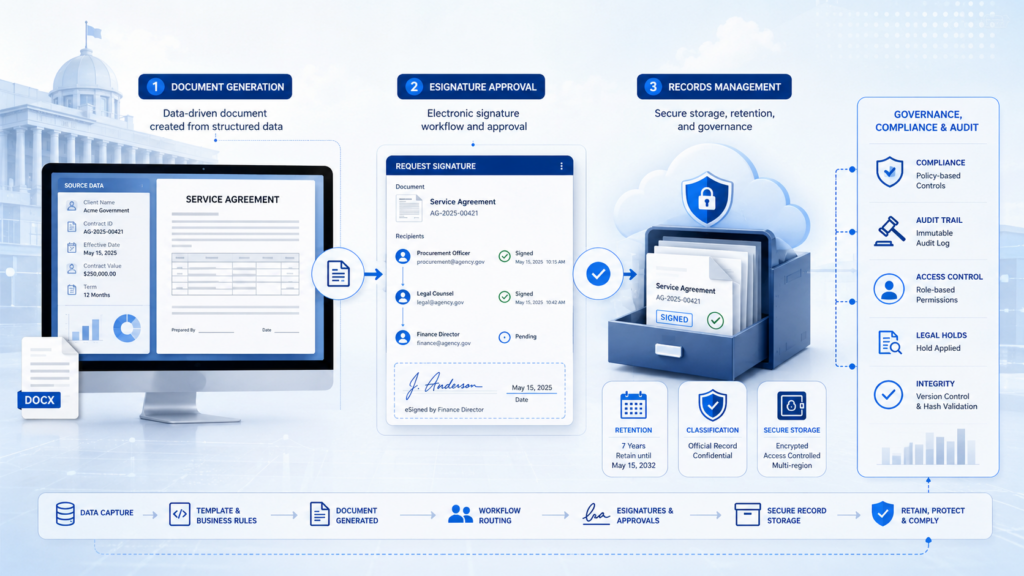
IIG connects document generation, electronic signatures, and records management into a single controlled lifecycle. Information captured during a business process can be used to generate standardized documents, route them for signature, and then manage the completed content as an official record with the appropriate retention and governance controls.
What Is Document Lifecycle Management?
Document lifecycle management is the coordinated handling of documents from creation through approval, execution, storage, retention, and final disposition. Instead of treating each stage as a separate task, an integrated lifecycle keeps document content, metadata, business context, and governance requirements connected.
For regulated and compliance-sensitive operations, this connection is essential. It helps ensure that documents are consistent, approvals are traceable, records remain searchable, and retention obligations are applied as part of normal operations rather than as a separate manual process.
The Problem With Disconnected Document Processes
When document creation, signatures, and records management operate in separate systems, staff may have to re-enter data, email files for approval, save multiple copies, and manually decide where the final document belongs. These handoffs increase the risk of inconsistent content, incomplete records, delayed approvals, and uncertainty about which version is authoritative.
The challenge continues after a document is signed. Without automated records controls, retention schedules may depend on individual staff actions, legal holds can be harder to manage, and responding to public records requests or audits may require time-consuming searches across disconnected repositories.
How IIG Connects Document Generation and eSignature
IIG dynamically generates standardized, data-driven documents using information already captured in the process. Notices, licenses, orders, and correspondence can be created consistently without requiring staff to rebuild the same content manually for each transaction or case.
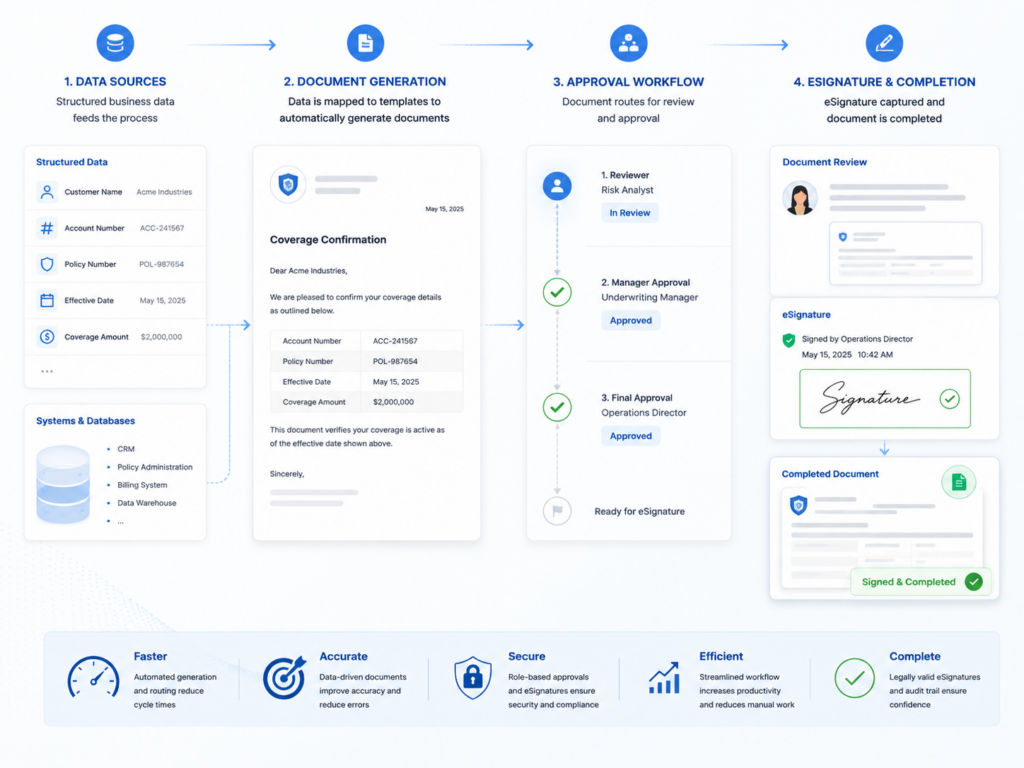
IIG dynamically generates standardized, data-driven documents using information already captured in the process. Notices, licenses, orders, and correspondence can be created consistently without requiring staff to rebuild the same content manually for each transaction or case.
Records Management and Compliance by Design
Once documents are executed, IIG can automatically classify them as records and manage them according to applicable records retention schedules. Embedding this step into the workflow reduces reliance on staff to manually apply records policies and helps create a consistent, repeatable governance process.
IIG records management capabilities support legal holds, public records requests, and audits by keeping information preserved, searchable, and defensible. Automated retention and disposition also help organizations avoid both unnecessary over-retention and premature deletion while maintaining a reliable record of operational activity.
Where the Integrated Document Lifecycle Delivers Value
This integrated approach is especially valuable for operations that produce formal documents and require traceable approvals, including licensing, enforcement, regulatory correspondence, notices, orders, acknowledgments, and other compliance-sensitive business processes.
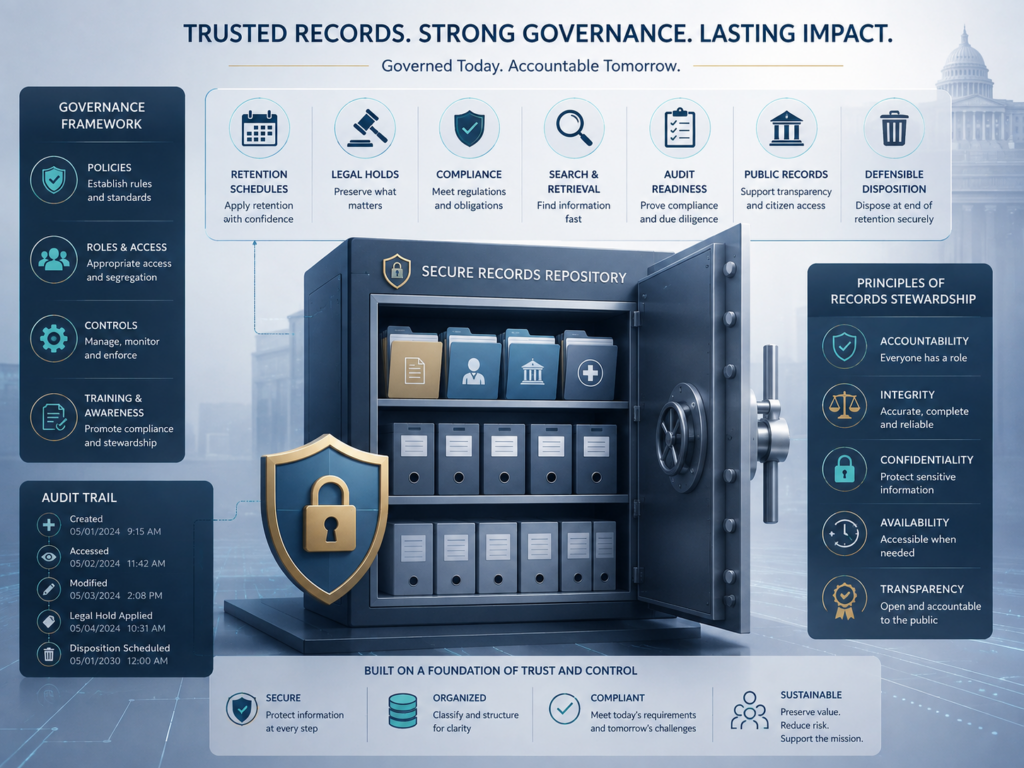
By connecting document generation, eSignature, records governance, and secure storage, IIG helps organizations maintain complete and authoritative information throughout the lifecycle. Staff spend less time managing files manually, while leadership and oversight teams gain greater confidence that records are controlled, auditable, and available when needed.
Conclusion
Document generation, eSignature, and records management are most effective when they operate as one lifecycle rather than separate tools. IIG brings these capabilities together so documents can be created consistently, executed efficiently, and governed appropriately from the moment they are generated through final disposition.
By embedding governance and compliance requirements directly into everyday document workflows, organizations can reduce manual effort, improve consistency, strengthen audit readiness, and maintain greater confidence in the integrity of their official records.
About IIG
Information Intelligence Group (IIG) delivers mission‑critical automation solutions that transform high‑volume, manual, paper‑based processes into secure, auditable, and scalable digital systems—supporting enterprise organizations across government and the private sector.